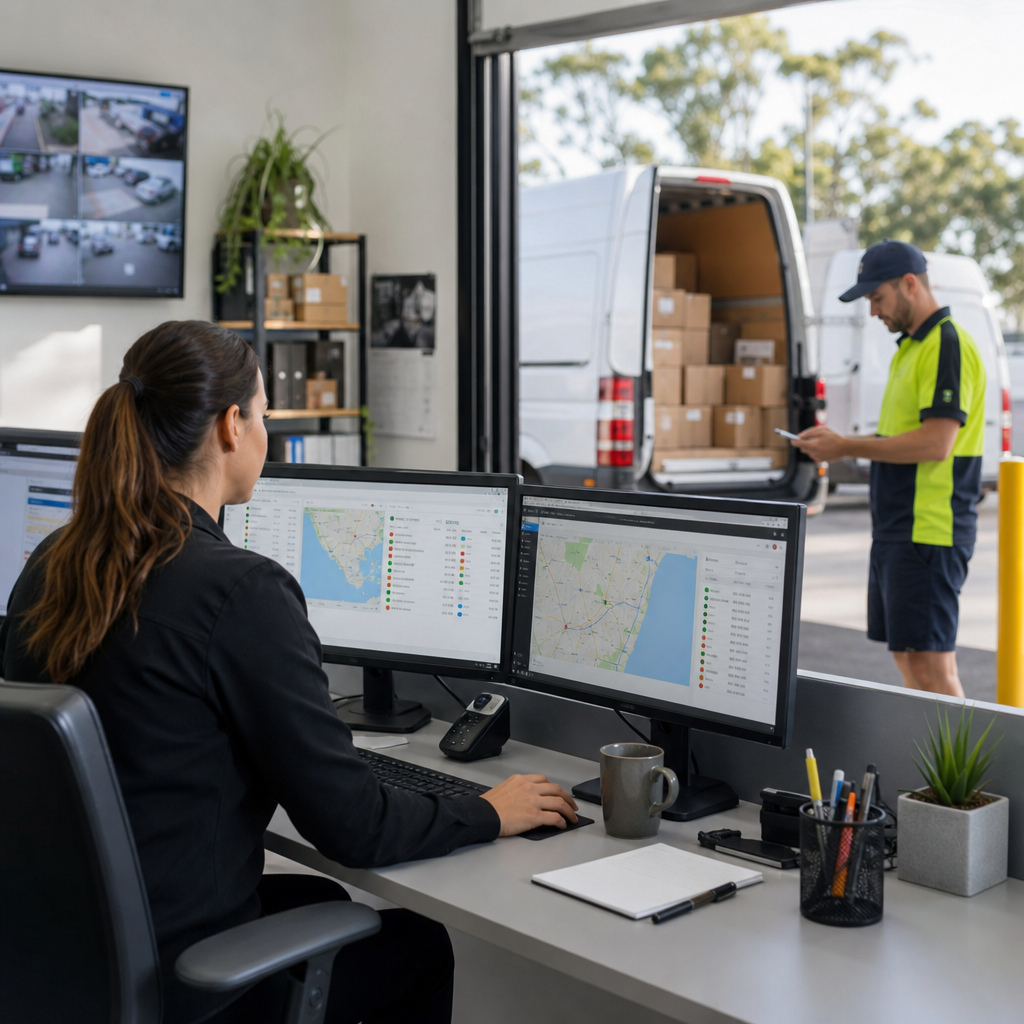
A customer calls a small logistics business asking where an urgent delivery is. The dispatcher checks an email, messages the driver and searches a spreadsheet. The driver remembers stopping at a site but cannot immediately confirm the time or reason for the delay.
The customer is frustrated, the dispatcher loses time investigating, and the business may not know whether the problem was caused by traffic, an incorrect address, a missed handover or a vehicle issue.
For smaller courier, freight and delivery operators, the problem is often not a lack of effort. It is that delivery information is collected in different places and updated inconsistently.
The operational problem is the missing timeline
A delivery usually passes through several stages:
- booking received
- pickup scheduled
- goods collected
- vehicle en route
- delivery attempted
- delivery completed
- proof of delivery recorded
- issue or exception resolved
If these stages are recorded through phone calls, text messages, driver notes and separate customer emails, it becomes difficult to answer basic questions:
- When was the shipment last confirmed?
- Who is responsible for the next action?
- Has the customer been notified?
- Is the delivery late, or is the status simply missing?
- Which jobs need immediate attention?
Without a consistent status history, staff must reconstruct events manually. That creates avoidable work and makes customer communication slower and less reliable.
Why the impact is greater than one delayed job
A single late delivery may be manageable. The operational cost grows when the same uncertainty affects several jobs at once.
Dispatchers spend time chasing updates instead of planning the next run. Customers contact the office for information that should already be available. Drivers receive repeated calls while working. Managers may compensate customers or reschedule jobs without knowing the real cause of the delay.
There is also a learning problem. If the business cannot distinguish between address errors, capacity problems, vehicle breakdowns and missed scans, it cannot identify which improvements will have the greatest effect.
The result is a cycle of reactive work: a delivery is delayed, someone makes calls, the job is completed, and the business moves on without creating a useful record of what happened.
Start with a controlled delivery-status workflow
The answer is not necessarily a new transport-management system. A smaller operator may gain more value by improving the flow around the systems already in use.
A practical workflow could provide:
- A standard set of delivery statuses
Staff and drivers use agreed stages rather than free-form descriptions such as “nearly there” or “waiting around.”
- A clear owner for each update
The system records whether the next action belongs to the driver, dispatcher, warehouse or customer.
- Required information for exceptions
If a delivery is marked as delayed, the workflow can request a reason, expected next step and whether customer contact is required.
- Automatic internal alerts
A job can be flagged when a planned milestone has passed without an update, rather than relying on someone to notice it later.
- A customer communication step
Selected status changes can trigger an email or message using approved information, while unusual cases remain with staff for review.
- A searchable history
Dispatchers can see the delivery timeline without searching across several conversations.
This can be implemented through configuration, integration or a lightweight custom interface, depending on the existing tools and the volume of work.
Design for exceptions, not just successful deliveries
A common mistake is to design only for the normal path: pickup, transit and completed delivery.
In practice, the difficult cases create most of the administrative pressure. A workflow should handle situations such as:
- the recipient is unavailable
- the address is incomplete
- goods are damaged
- a vehicle becomes unavailable
- a customer changes the delivery window
- a driver cannot safely complete the job
- a delivery requires a second attempt
Each exception should have a defined next step. For example, “recipient unavailable” might require a photo or driver note, a proposed re-delivery window and customer confirmation. “Vehicle issue” might alert the dispatcher and place affected jobs into a review queue.
This does not mean automating every decision. It means making the decision visible, assigning responsibility and preventing the issue from disappearing into a message thread.
Connect the workflow to existing systems
The delivery workflow should not become another isolated place for staff to maintain.
Useful connections may include:
- importing bookings from an existing order or accounting system
- sending delivery instructions to a driver-facing app
- recording proof-of-delivery links against the original job
- updating customer status through the website or email
- passing completed delivery information to invoicing
- producing reports on delays, failed attempts and unresolved exceptions
The integration should also include validation. If an address is incomplete, a contact method is missing or a job has no assigned driver, the issue should be identified before it reaches the delivery stage.
Measure the causes, not just the outcomes
Once delivery milestones are captured consistently, management can review useful operational questions:
- Which delay reasons occur most often?
- Which customers or routes generate repeated exceptions?
- How long do unresolved delivery issues remain open?
- How often is proof of delivery missing?
- Which jobs require manual intervention?
- Are customer updates being sent at the right point?
The purpose is not to create a complicated dashboard. It is to give the owner enough reliable information to decide whether the priority is better address validation, route planning, driver instructions, customer communication or staffing.
The practical lesson
A delivery business does not need to automate every part of its operation to improve reliability. It needs a dependable way to record what happened, identify what is blocked and make the next action clear.
Start with the delivery milestones and exceptions that create the most calls and follow-up work. Then connect that workflow to the systems already holding booking, customer and payment information. A focused improvement can make delays easier to explain, resolve and prevent.
If your business is struggling to track delivery updates or explain delays, visit Melbourne Digital Solutions. Nate and Ben are available there to answer questions and help you think through practical options.